
The roof every year, the inside every 3 to 5
Every atmospheric storage tank is inspected once a year including the roof, and gets a thorough interior and exterior inspection every 3 to 5 years (Chapter 8.1.22(3) and (1)).
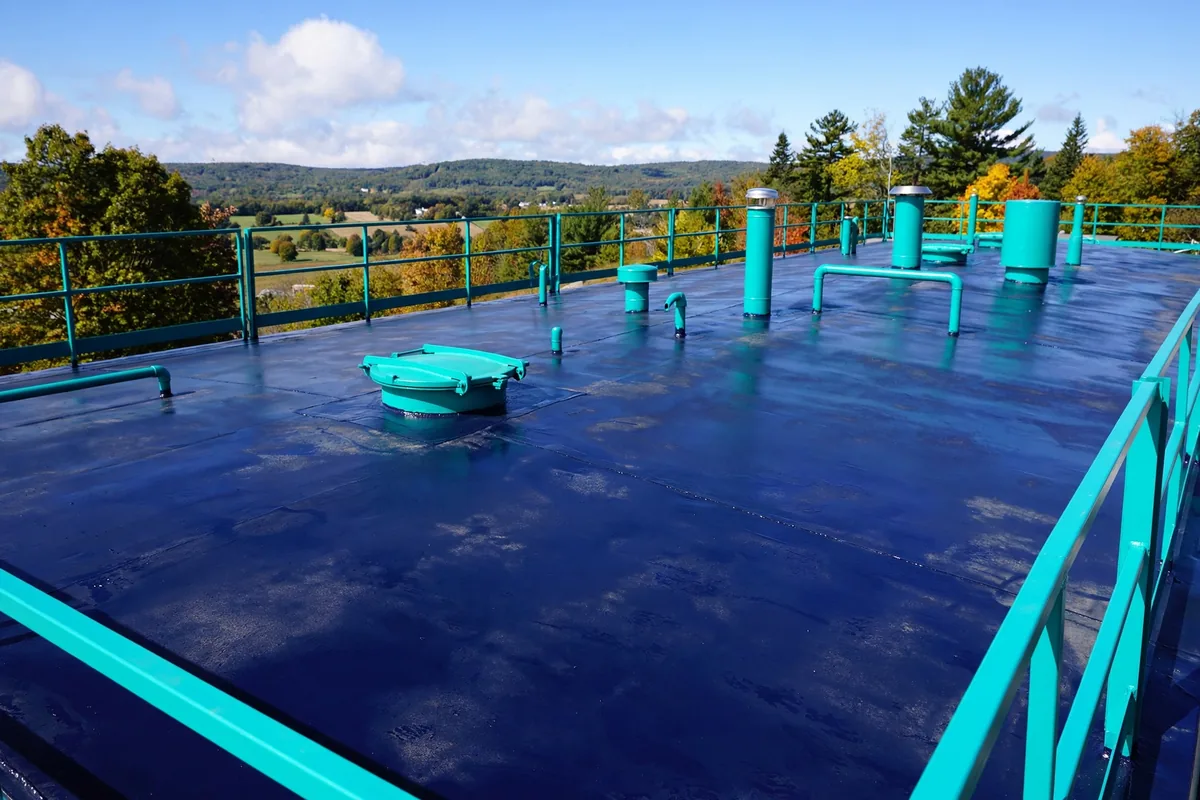
Before anyone goes up
On a tank roof, workers are protected from falls greater than 6 feet at all times, by a guardrail, a fall restraint or fall protection. Placing the head into the tank to look inside counts as tank entry, a confined space (Chapter 8.1.14).
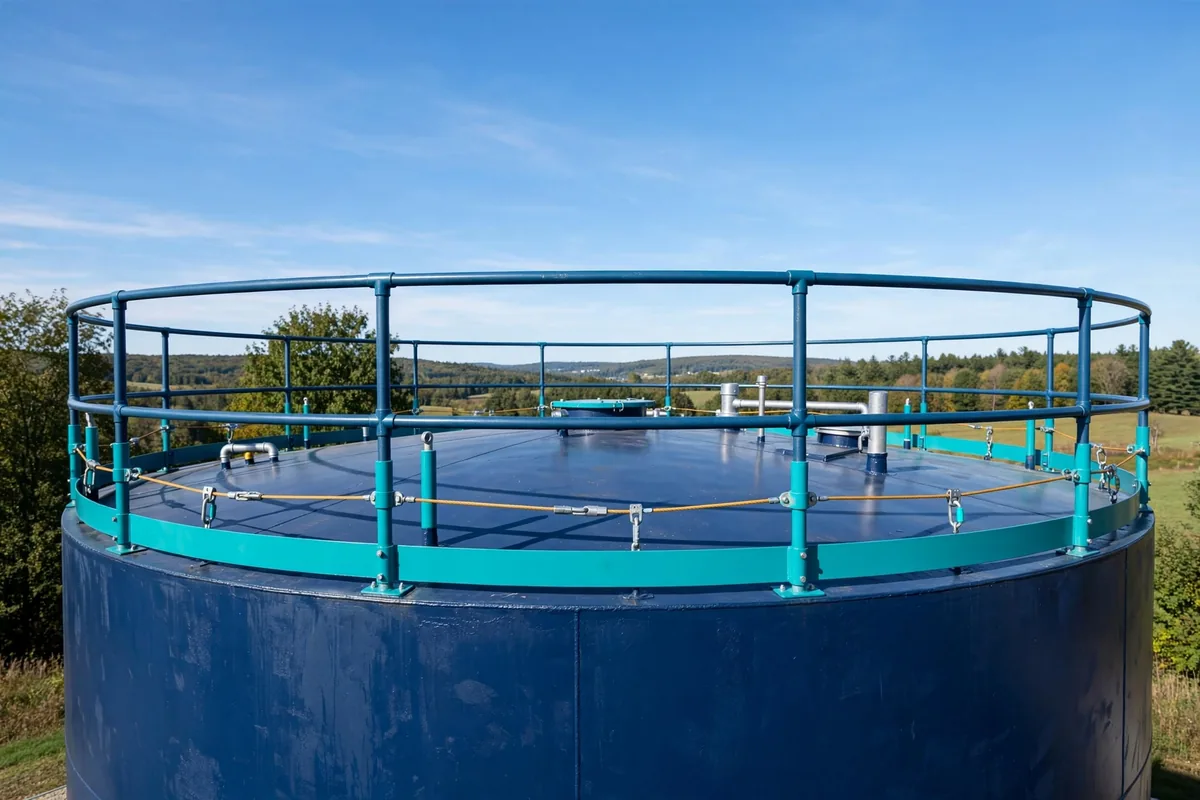
The roof inspection
- Are the manhole hatches closed, locked and sealed watertight?Problem if No
- Are the vent caps in place and undamaged?Problem if No
- Are the vent and overflow screens in place and in good condition?Problem if No
- Are all roof penetrations and seals watertight?Problem if No
- Are there signs of vandalism on the roof or top?Problem if Yes
- Are all locks present and working?Problem if No
- Are there other sanitary defects (openings, gaps, bird or animal entry, debris)?Problem if Yes
The interior and exterior inspection
Done by qualified, experienced people. The app records how it was done, the sediment depth and four questions on the overall condition.
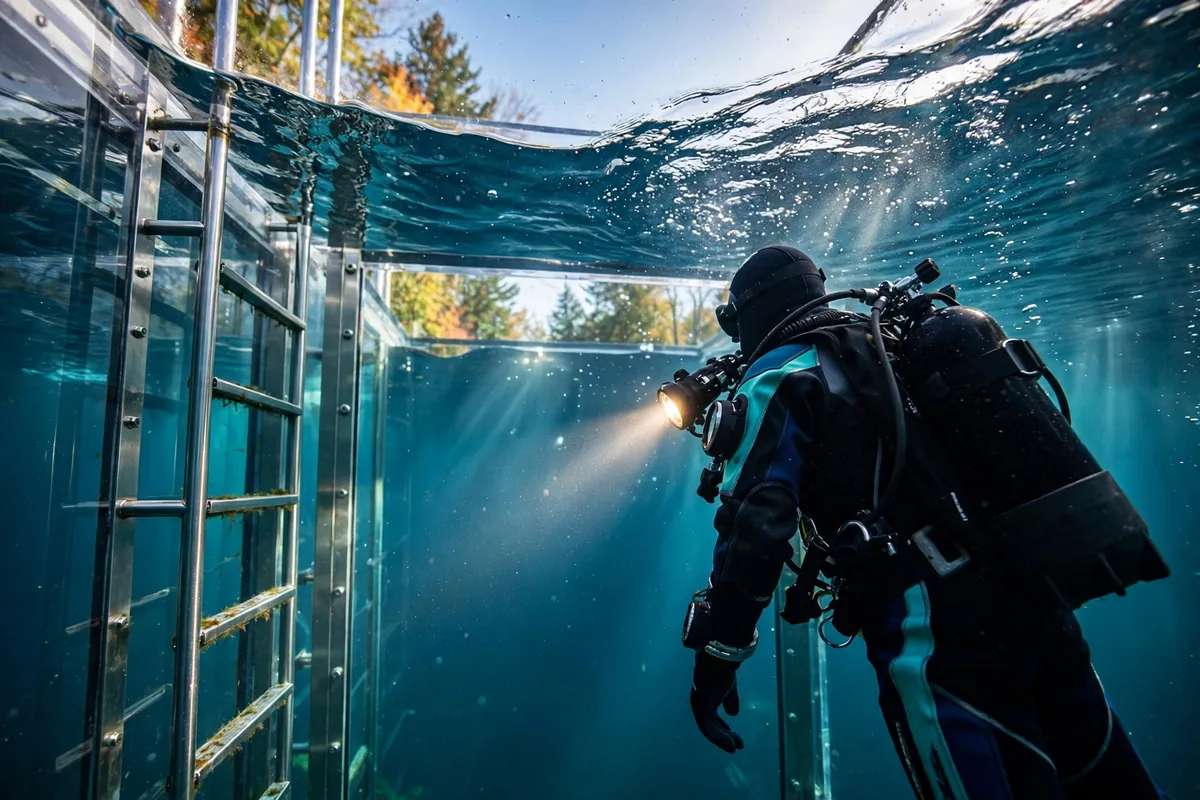
Diver, tank in service
A diver inspects the tank while it stays in service.
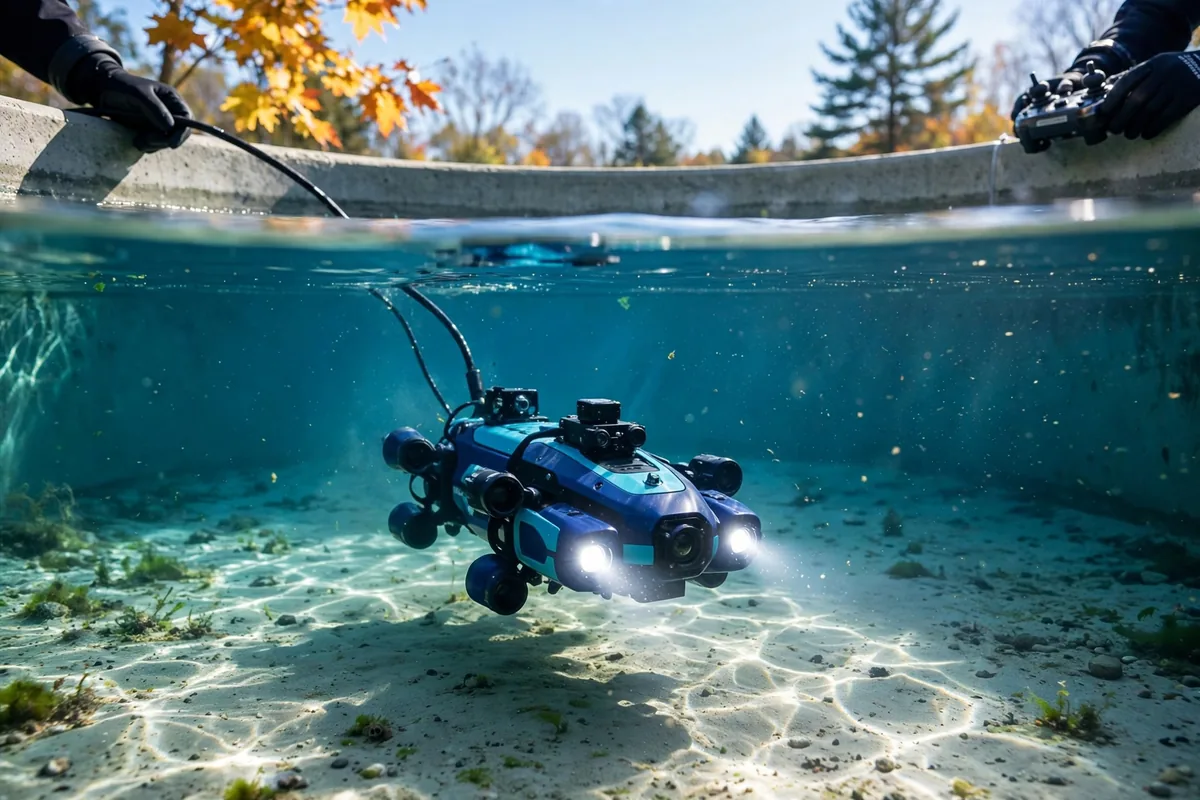
ROV, tank in service
A remotely operated vehicle films the inside while the tank stays in service.
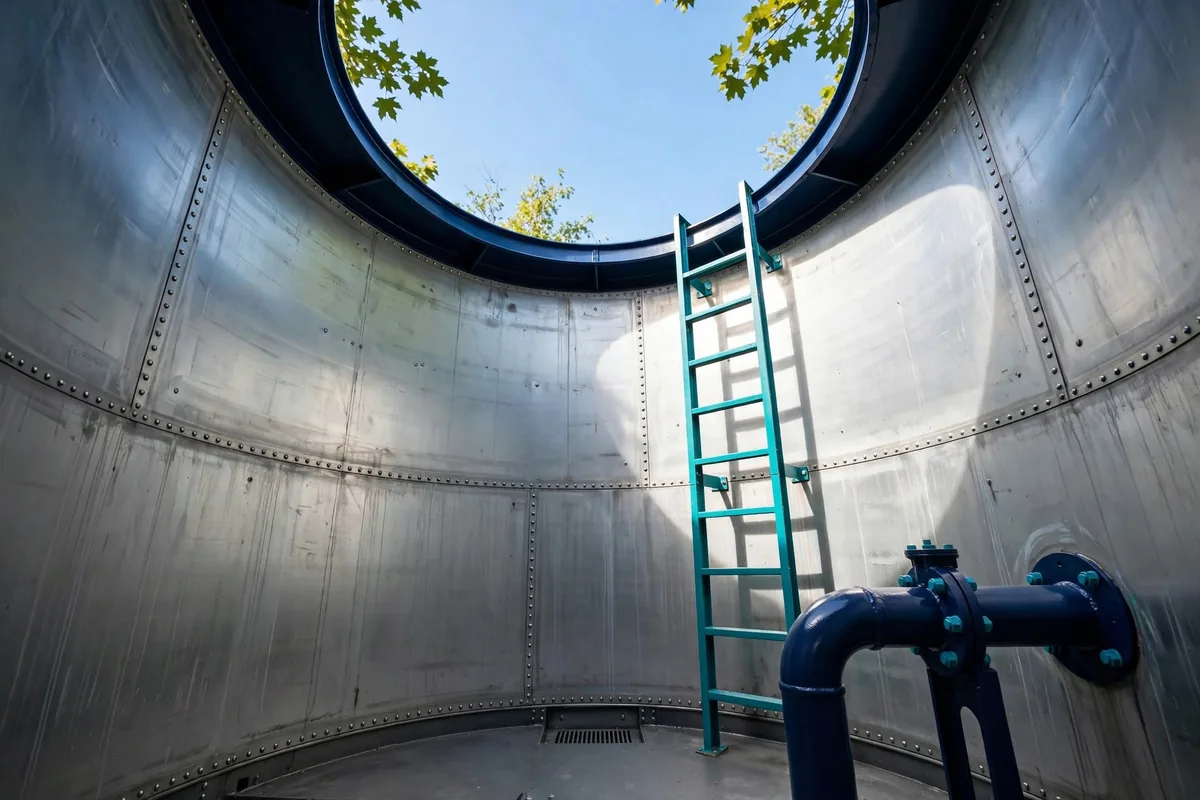
Drained tank
The tank is taken out of service and drained; it is disinfected before it returns.
- Are there issues with the tank foundation?Problem if Yes
- Does the tank appear structurally sound?Problem if No
- Are there unprotected openings (breaches, leaks, daylight through the tank)?Problem if Yes
- Is there corrosion developing in or on the tank?Problem if Yes
Condition questions from EPA Region 8 Drinking Water Unit, Finished Water Storage Tank Checklist (2025-10).