
Back into service, clean and tested
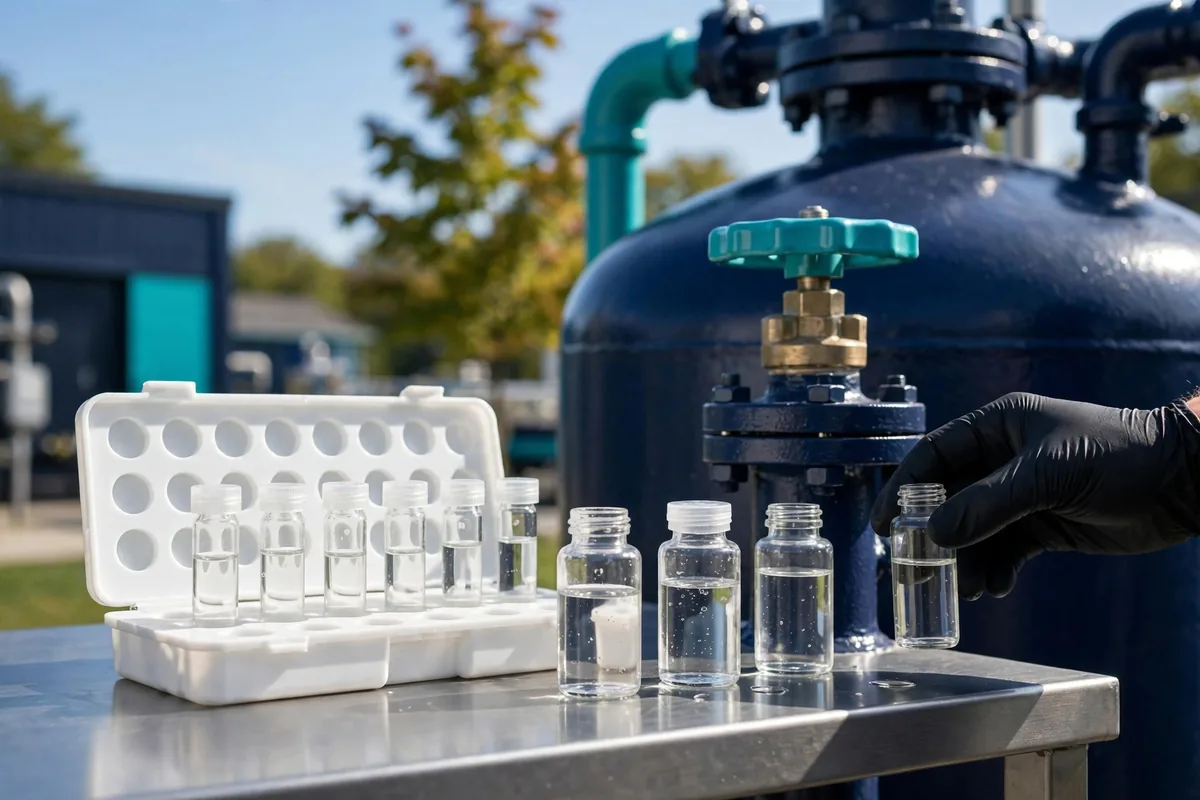
A drained or cleaned tank is disinfected by one of the AWWA C652 methods before it returns to service; for in-service diver work the divers and equipment are disinfected before entry. The record that the tank is ready is the bacteriological test showing the stored water free of coliform bacteria.
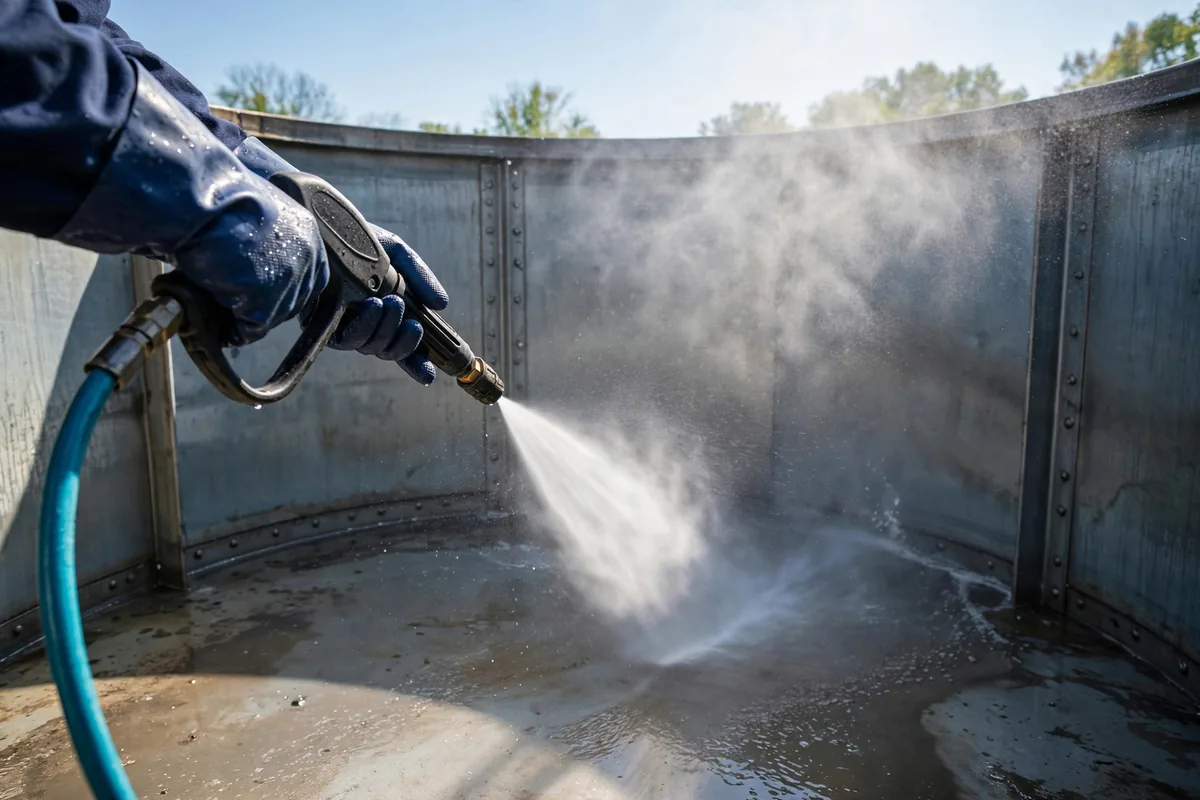
Disinfection in short
As summarised in the EPA Region 8 storage tank checklist. The standard itself and the state program decide what applies.
Method 1
Chlorinate the full tank so that at the end of the retention period the free chlorine residual is at least 10 mg/L (6 hours when sodium hypochlorite is added while filling, 12 hours with calcium hypochlorite tablets placed before filling). Drain or blend the high-chlorine water, meeting local discharge rules.
Method 2
Spray or paint all water-contact surfaces with a 200 mg/L available chlorine solution, with at least 30 minutes contact; fill drain pipes with 10 mg/L; then fill with potable water.
Method 3
Fill about 5% of the volume with a 50 mg/L chlorine solution and hold at least 6 hours, then fill to overflow and hold at least 24 hours with a free chlorine residual of at least 2 mg/L.
What Tank Watch keeps
- Drained and cleaned, or cleaned by divers in service
- The disinfection method, 1, 2 or 3
- The bacteriological result: passed, pending or failed, with its date
- Notes
Sources: EPA Region 8 Drinking Water Unit, Finished Water Storage Tank Checklist (2025-10); MassDEP Guidelines for Public Water Systems, Chapter 8 Finished Water Storage (Rev 5-11).